Topic 5: CRUDE: ASCENSION
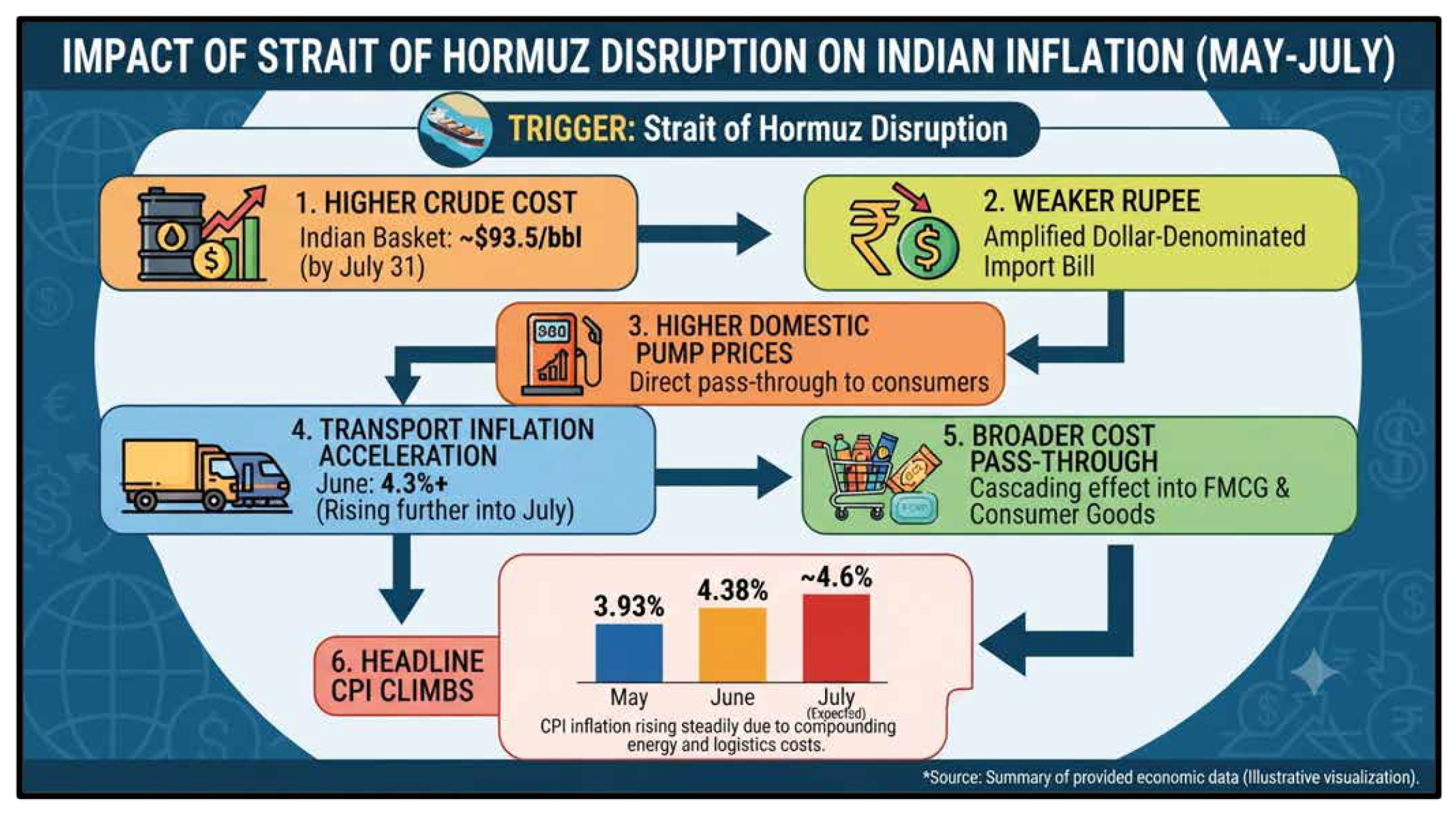
Crude oil markets experienced a dramatic turnaround in July 2026, with prices rising sharply after beginning the month at multi-month lows. Brent crude started July below $70 per barrel, reflecting easing supply concerns following the June ceasefire in West Asia, but sentiment changed rapidly as renewed geopolitical tensions triggered a powerful rally. By mid-July, escalating military action between the US and Iran, attacks on commercial vessels, and repeated threats to disrupt shipping through the Strait of Hormuz pushed Brent crude above $85 per barrel. The rally intensified in the final week of the month, with Brent ending July near $88 per barrel, recording a monthly gain of roughly 18–24%, its strongest rise since March 2026. The resurgence in crude prices was driven primarily by fears of supply disruptions rather than changes in underlying demand. The renewed US-Iran conflict, attacks on oil tankers, and uncertainty surrounding one of the world's most important energy transit routes significantly increased the geopolitical risk premium in oil prices. Falling US crude inventories further tightened market sentiment, while concerns over slowing global demand that had weighed on prices earlier in the month were overshadowed by escalating supply risks. Although alternative shipping routes through the Red Sea gradually reduced fears of a complete disruption to global oil flows and OPEC+ maintained plans to increase production from August, these factors only moderated, rather than reversed, the rally toward month-end. For India, the sharp increase in crude oil prices posed significant macroeconomic challenges. As the country imports nearly 85% of its crude oil requirements, higher international prices translated into rising fuel and transportation costs, putting upward pressure on inflation. The impact was amplified by a weaker rupee, which increased the local currency cost of oil imports. Higher logistics and input costs also raised concerns about broader inflation through food, manufacturing, and consumer goods. Inflation expectations consequently strengthened, with analysts anticipating headline CPI to rise further after June's increase to 4.38%, while the Reserve Bank of India maintained a cautious stance on monetary policy. Overall, July highlighted how geopolitical developments in West Asia quickly transmitted into India's economy through higher energy costs, reinforcing crude oil's role as the primary channel of imported inflation during the month.