Topic 4: RUPEE: ANCHORING
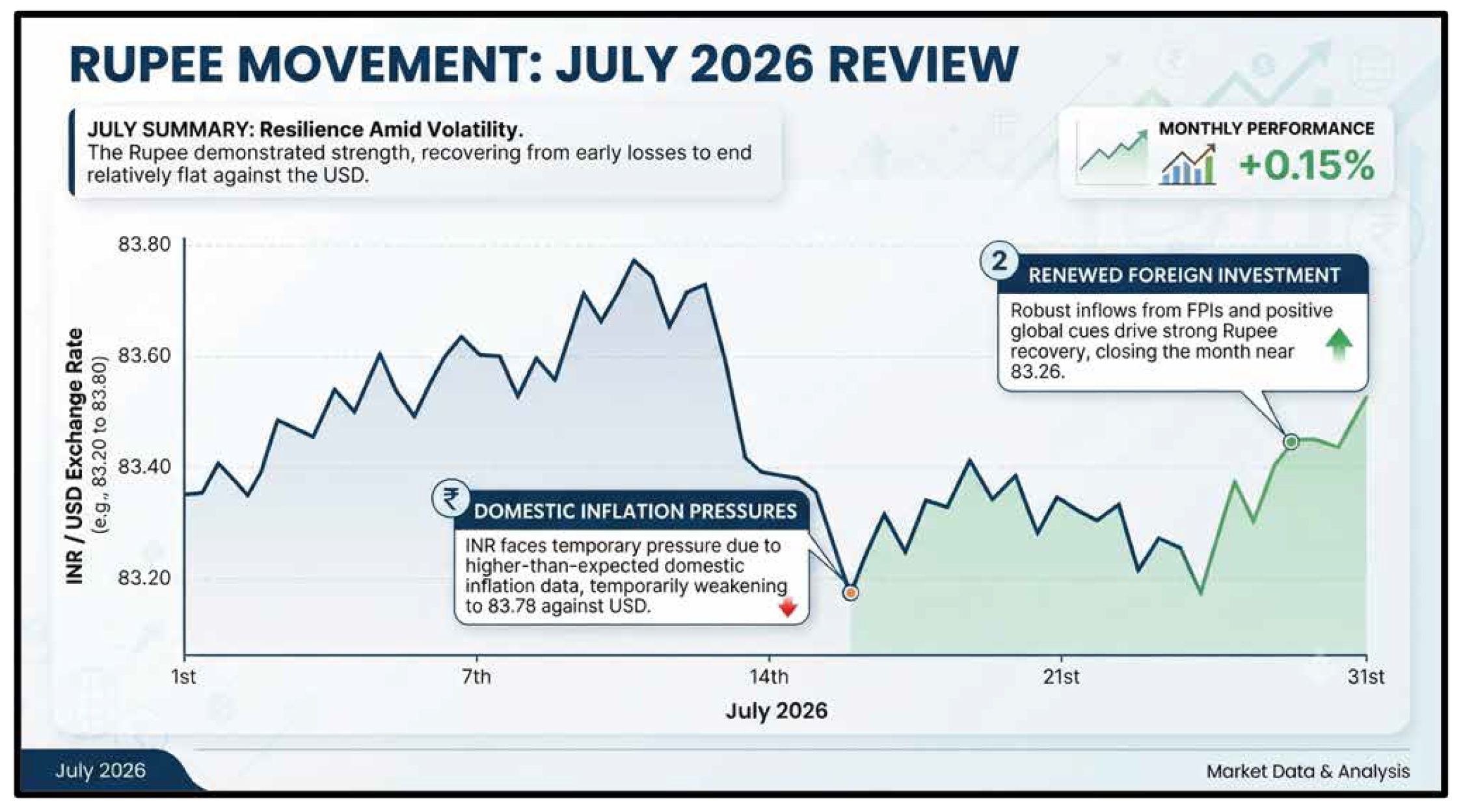
The Indian rupee remained under pressure throughout July 2026, trading within a relatively narrow 95.0–96.0 per US dollar range but experiencing intermittent bouts of weakness driven by external factors. Although the currency briefly approached its record low of 96.88 per dollar during the month, it recovered to close at around 95.35–95.37 per dollar, ending July modestly firmer than its weakest levels but still historically weak. Compared with the sharp depreciation witnessed earlier in 2026, July represented a period of relative stability, though the rupee remained vulnerable to global developments and persistent dollar strength. The principal source of pressure was renewed geopolitical tension in West Asia, which pushed Brent crude oil prices close to $90 per barrel at times. As India is heavily dependent on imported crude, rising oil prices widened concerns over the country's trade deficit, inflation, and current account balance, weighing on the currency. These pressures were compounded by a strong US dollar, supported by the US Federal Reserve's hawkish policy stance and expectations that interest rates would remain elevated for longer. Higher US yields encouraged global investors to favour dollar assets, limiting the appeal of emerging market currencies, including the rupee. Despite these headwinds, the rupee avoided a sharper depreciation largely due to decisive intervention by the Reserve Bank of India (RBI). Around July 25, when the currency neared its record low, the RBI reportedly sold nearly US$7 billion in the foreign exchange market—one of its largest interventions in recent months—and continued supporting the rupee through additional dollar sales and liquidity management measures. Investor confidence was also strengthened by recent capital-account reforms, including the expansion of the Fully Accessible Route (FAR) for government securities and tax incentives for foreign investors, which encouraged sustained foreign investment into Indian debt markets. Additionally, foreign portfolio investors returned as net buyers of Indian equities during July, providing further support to the rupee. Overall, July reflected a fragile balance in which external pressures from higher oil prices and a stronger dollar were largely offset by RBI intervention, healthy foreign capital inflows, and India's comfortable foreign exchange reserves, allowing the currency to stabilise despite persistent global uncertainty.